Order Brief / CRE-SO-14
Custom board shorts wholesale: prepare the order brief
A useful brief identifies the garment, the approval owner and the information still missing. Use this acceptance sequence to keep the proposed fabric, sample and quotation tied to the same requirement.
- Name the garment and intended sport.
- Record measurable fit and material requirements.
- Review the proposed sample and evidence.
- Approve a defined revision before discussing production.
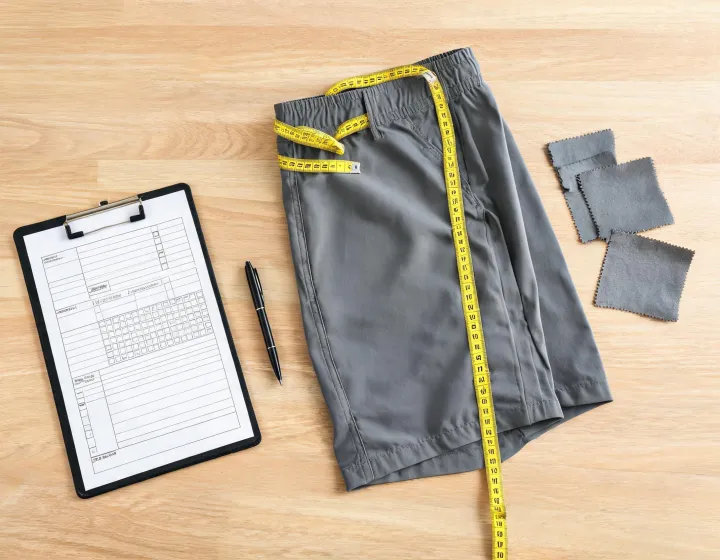
Four document tabs for one purchase decision
Material and fit specification
Request fiber content, woven construction, fabric weight in gsm and stretch direction if relevant. Supply waist, hip, rise and outseam measurement points in one unit system, plus the size grading rule. A requested specification should be marked as requested until the supplier confirms it.
Record the color reference, decoration method, print dimensions and artwork revision. A fabric swatch can help choose color or hand feel, but it does not represent the final garment's stitching, printed finish or assembled fit.
Sample approval record
Name the reference garment and list what the sample must demonstrate: construction, measurements, waistband, pockets, artwork and labeling. Define who approves the sample, which tolerances apply and how discrepancies are recorded. Ask whether the sample uses the quoted production material.
If a test or performance statement is requested, ask for the method, conditions and item identity. Missing results remain unresolved. A check on a related fabric or another garment cannot automatically approve the proposed board shorts.
Piece, pack and carton basis
Write quantity by size and color, the contents of each pack and the labeling needed for sorting. For an illustrative 480-piece request packed at 24 pieces per carton, the arithmetic gives 20 cartons; the supplier still needs to confirm actual packing and carton dimensions.
Individual bags, hangtags, woven labels and retail-ready packing change the included work. Keep them as separate quote fields so a simpler pack cannot be mistaken for an equivalent retail configuration.
Destination and cost exclusions
Identify the US city or delivery region, required date and shipment scope to request. Ask which transport charges and destination charges are included, which remain estimates and which are excluded. A production estimate and a delivery estimate are different assumptions.
State optional budget with currency and whether it covers one piece or the whole order. Compare high-end, mid-range, budget or undecided preferences against actual fabric, finish and service differences, not an implied supplier ranking.
Review caution: the brief is an instruction set, not evidence that a supplier holds stock or that the item meets a requirement. Keep unknown fields visible and ask for answers tied to the proposed garment.
What you can provide
Intended use, wearer profile, fit reference, requested size run, colorways, artwork and quantity basis belong in the buyer column. Add an approval contact, acceptable alternatives, optional budget and a realistic destination requirement.
What the supplier must confirm
Proposed composition, measurable dimensions, MOQ by variant, sample charges, production assumptions and exact packing belong in the response column. Item-specific label or test information remains subject to document review. We coordinate these questions without certifying the product.