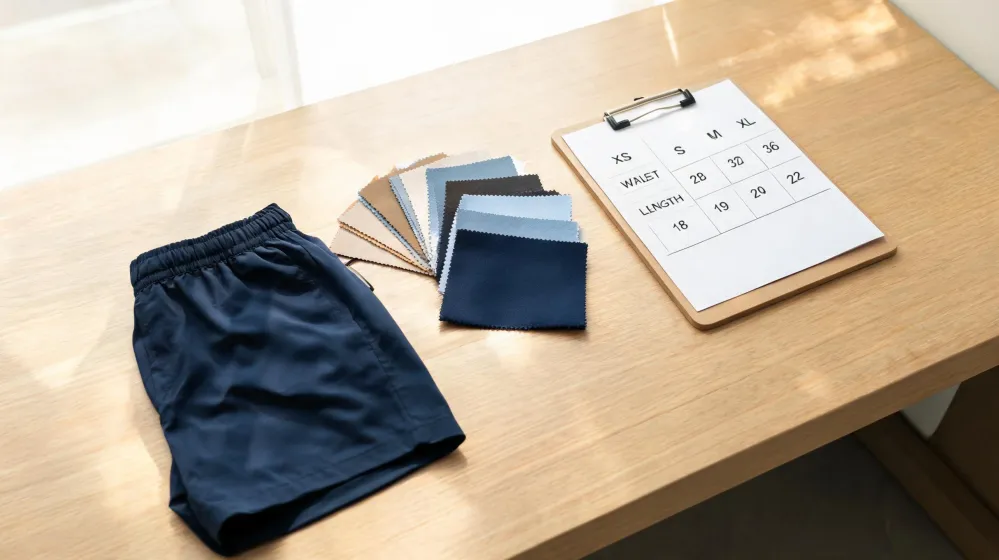
The artwork came back and the sample is on its way — which one do I sign? Neither, and the order matters. The published page for the KTP Design Company SW-1 board shorts separates three things buyers usually lump together: an artwork presentation offered free of charge, a photo sent free of charge, and an actual sample that is charged for. Only the third one authorizes bulk production, because only the third one puts ink on the cloth you will cut. Read the sequence as a workflow reference for that one model, not as a guarantee that any supplier will run it the same way.
Nothing here assumes anyone is dishonest. Artwork and photos are useful artifacts; they simply answer smaller questions than buyers ask of them. The practical job is to keep each one in its lane and to let the paid step carry the decision.
What Actually Counts as Approval on Board Shorts
Each artifact locks something different. An artwork presentation locks layout intent, color direction and logo proportions as rendered on a screen; it leaves open how the ink sits on the base fabric, how the print scales against the actual panel, and what happens where the side seam takes the print. A photo locks existence, meaning the short was built and the print was applied, and it leaves open scale, seam creep and color shift. The physical sample locks all of it, plus hand feel, seam behavior and label placement, none of which any file or photograph carries.
Treating the artwork presentation as the approval event is the error that starts most of these disputes. It arrives first, it looks finished, and it is free, so it gets forwarded with a note that says looks good, and the bulk order starts moving behind it. The consequence is a production run justified by a file that cannot be laid against cloth. Name the physical sample as the approval document in writing before the sample is even requested, so nobody in the chain can claim later that the artwork was the sign-off.
What a Free Artwork Presentation Really Covers
Free design help moves cost, not risk. A presentation produced on request and at no charge is a proposal artifact: a rendering of what your print could look like, not a statement about the fabric, the construction, or what a plant can run at volume. Nothing about ink behavior on a specific base cloth is settled at that stage. It is a communication tool for agreeing intent, and it should be judged as one.
Send a written brief before you ask for the presentation. State where the print must sit, which panel it belongs on, the color references you will judge against, the size range you intend to grade, and which elements are non-negotiable. The effect is immediate: presentations from different candidates come back comparable instead of merely attractive, revision rounds drop because nobody is guessing at your intent, and the chosen file goes to sampling without being reinterpreted. Requesting artwork with no brief is the mistake here; the consequence is a presentation you cannot compare to anything or hand to a pattern maker, and the fix costs one page of writing.
Why a Photo Cannot Settle Print Placement
Photos are evidence. They are not a measurement. They prove the print landed, not that it landed in the right place. A high-resolution shot tells you the ink exists, but it cannot tell you where the print edge actually falls relative to the side seam, whether the ink creeps across the seam allowance once the front and back panels are joined, or how the base fabric pulls color away from the swatch you approved, because all three of those depend on cloth under tension rather than pixels on a screen.
The obvious objection is that a modern phone with a color card in frame settles all of it. It narrows the field; it does not close it. A flat lay from one angle compresses the very geometry you are trying to check, and a swatch beside a print confirms hue, not how the ink reads once it is set into that particular weave.
Use the photo as a filter anyway. Ask for a fixed-angle shot with the whole short in frame, a scale reference beside it, and a named color swatch next to the print. That combination removes obviously wrong versions before you pay for sampling, which is the entire value of a free photo. Approving on the strength of a photograph is the mistake: you have then accepted geometry nobody measured.
Lock One Artwork Version Before Sampling
Give every artwork file a version ID and a date. Record which version the buyer approved, and cite that ID in the sample request so the sample cannot arrive matching a file you have already superseded. One frozen version per sample round.
Approving through an email thread with four attachments and no naming rule is the error, and it is the most expensive one on this list because it surfaces late. The sample gets judged against artwork nobody wants, rework is charged to whichever party holds the weaker paper trail, and the schedule absorbs a second round. Because a sample only means something when it can be tied to one file, every hand-off needs an identifier attached to it, and that identifier is the only thing that makes a later dispute resolvable.
Sample Sign-Off Checks That Prevent Rework
Build the sign-off sheet around what only the physical sample can show. The artwork version ID matches what was requested. The print sits on the panel you specified, at the position you specified. The color matches the agreed reference under the light you will actually judge it in. The graded set is consistent, with the print neither shrinking on the small size nor drifting on the large one. Labels and packaging sit where they were meant to sit. Every line gets a reviewer name and a date beside it.
Then photograph the approved sample from the same fixed angles you used before approval and archive that set with the version ID. Skipping the archive because the sample looks right is the mistake at this step; the consequence lands on the next production run, when the only reference left is somebody's recollection. A checkable reference with a date on it turns that into a comparison.
A skeptic would say this is bureaucracy for a pair of shorts. It is bureaucracy only if nothing goes wrong, and it is the only thing you hold when something does. The sample is also the one paid step in the sequence, so it is where money and the decision meet; that is exactly where a written record earns its keep, not in the free stages.
What the Reference Page Leaves Unanswered
The page covers one model's design and sampling steps. It says nothing about fees, lead times, minimum order quantities, capacity, certifications or third-party test results, and those commercial terms move over time, so they stay open questions rather than figures you can plan against. Filling the gaps with assumed figures is the mistake at this stage; the consequence is a plan built on numbers no supplier ever agreed to, and the fix is simply to ask.
Put the same short question set to every candidate: how many artwork revision rounds are included, what the sample charge covers and whether it is credited against the bulk order, who owns the approved sample file, how the version ID is recorded on the shipping documents, and what documentation they can supply for the materials they propose. The effect is comparable answers across suppliers and a written trail that matches the sample you approved, which is the only version of the process that survives a change of contact person on either side.
Insisting on a physical sample costs speed and a budget line, and what it buys is a decision you can defend later. If either cost is unacceptable, settle that before the artwork request goes out, not after the sample lands.

Leave a comment